We stand at a fascinating inflection point in the history of technology. The gadgets that surround us are no longer just smart; they are becoming intuitive. The next decade promises a fundamental shift in how we interact with our devices, moving from a world where we command our technology to one where our technology anticipates our needs. This future is being built on two powerful, converging forces: Artificial Intelligence (AI) and the Internet of Things (IoT). Together, they are weaving a digital fabric that will surround us, support us, and fundamentally reshape our relationship with the gadgets we use every day.
The Future of Gadgets, AI Integration and the Internet of Things (IoT)
Understanding the Convergence
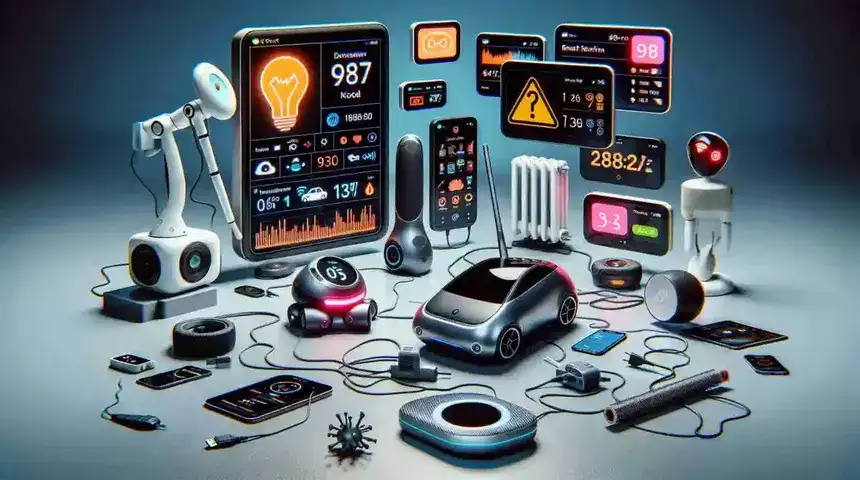
First, let’s define our terms. The Internet of Things (IoT) refers to the vast network of physical devices embedded with sensors, software, and connectivity that allows them to exchange data. This includes everything from your smartwatch and your thermostat to your refrigerator, your car, and even industrial machinery. It’s about taking everyday objects and giving them a digital voice.
Artificial Intelligence (AI) , particularly the branch known as machine learning, is the engine that makes sense of all the data these IoT devices generate. AI can analyze massive datasets, identify patterns, learn from them, and make predictions or decisions. When you combine the data-gathering power of IoT with the analytical power of AI, you create a system that doesn’t just report on the world; it understands it and acts within it.
This convergence is already happening. Your smart thermostat doesn’t just report the temperature; it learns your schedule and preferences and adjusts itself. Your fitness tracker doesn’t just count your steps; it analyzes your sleep patterns and activity to give you personalized health insights. This is just the beginning.
The AI-Powered Home
Imagine walking into your future home. It doesn’t wait for you to issue commands. It knows you’ve arrived. The lights gradually brighten to your preferred evening setting. The thermostat adjusts to your preferred temperature. Your favorite playlist begins softly playing in the background, selected because the AI knows you typically want to unwind after a Wednesday commute.
In the kitchen, your refrigerator has been tracking its contents. It knows you’re running low on milk and eggs, and it has already added them to your shopping list. It has even suggested a few recipes based on the ingredients you have and your dietary preferences. Your smart oven, communicating with the fridge, preheats itself when you select a recipe.
This is the promise of the AI-powered home: a living environment that is not just connected, but genuinely helpful. It frees you from the cognitive load of managing your surroundings, allowing you to focus on what matters. It learns your habits, adapts to your routines, and operates seamlessly in the background.
Wearables Become Health Guardians
The future of health gadgets is equally transformative. Today’s wearables track steps and heart rate. Tomorrow’s will be proactive health guardians. Advances in sensor technology will allow future smartwatches and even smart rings to monitor a much wider range of biomarkers: blood pressure, blood sugar levels, hydration status, and even stress hormones, all without needles or cuffs.
But the real revolution will come from the AI that analyzes this data. Your wearable won’t just tell you that your heart rate is elevated; it will notice a pattern of elevated heart rates during certain times of day and correlate it with your calendar, suggesting that those back-to-back meetings might be a source of chronic stress. It might detect subtle changes in your vital signs that are early indicators of an oncoming illness, even before you feel symptoms, prompting you to rest and hydrate. For individuals with chronic conditions like diabetes or hypertension, this kind of proactive, continuous monitoring could be life-changing, alerting them and their doctors to potential problems long before they become emergencies.
The Challenges Ahead: Privacy and Security
This hyper-connected, AI-driven future is incredibly exciting, but it also raises profound challenges. The most significant is privacy. A home that knows everything about you—when you wake, what you eat, your health data, your conversations—is a home that is collecting a staggering amount of personal information. Who owns this data? How is it being used? Who has access to it? The potential for misuse, whether by corporations for targeted advertising or by malicious actors through data breaches, is enormous.
Security is the other side of this coin. A network of connected devices is only as secure as its weakest link. Your smart light bulb could be the entry point for a hacker to access your entire home network. As our homes, cars, and even our bodies become more connected, the attack surface for cybercriminals expands dramatically. The future of gadgets depends on building robust security into every device from the ground up and giving users transparency and control over their data.
The Invisible Future
The ultimate goal of this technological evolution is for the gadgets themselves to fade into the background. The most profound technologies are those that disappear. They weave themselves into the fabric of everyday life until they are indistinguishable from it. The future of gadgets is not about more screens, more notifications, and more complexity. It is about creating an intelligent, responsive environment that anticipates our needs, supports our well-being, and frees us to be more fully human. The AI and IoT revolution promises to make technology less of a tool we use and more of a partner we live with. The challenge—and the opportunity—is to build that future responsibly, ensuring that it serves humanity rather than the other way around.