
Smart Home Gadgets 2026: From Smart Speakers to Robot Vacuums

Smart Home Gadgets 2026

The dream of a home that anticipates your needs, responds to your voice, and takes care of tedious chores is no longer science fiction. It’s the reality of the modern smart home. What began as a novelty—a light bulb you could control with your phone—has evolved into a comprehensive ecosystem of interconnected devices that can enhance convenience, improve security, save energy, and even look after your loved ones. In 2026, the smart home gadgets is more accessible and capable than ever, but with so many gadgets on the market, knowing where to start can be overwhelming.

Smart Home Gadgets 2026: From Smart Speakers to Robot Vacuums

https://paninikeypad.com/smart-home-gadgets-2026/

The Brain of the Operation: Smart Speakers and Displays

At the heart of most smart homes is a smart speaker or smart display. Devices like the Amazon Echo (with Alexa), Google Nest Hub (with Google Assistant), and Apple HomePod (with Siri) serve as the central command center. They listen for your voice commands and translate them into actions. You can ask them to play music, set timers, check the weather, read the news, and, most importantly, control all your other smart devices.

Smart displays add a visual element to this interaction. They can show you video feeds from your security cameras, display step-by-step recipes in the kitchen, or make video calls to family members. They are the hub through which you can monitor and manage your entire connected home. Choosing which ecosystem to buy into is a major decision, as devices from one ecosystem (like Alexa) often don’t play perfectly with another (like Google Home). Your choice may be influenced by which smartphone you use or which features matter most to you.

Convenience and Comfort: Lighting, Climate, and Cleaning

The most popular smart home gadgets are those that add convenience to daily life. Smart lighting, from brands like Philips Hue or LIFX, allows you to control lights with your voice or phone. You can schedule them to turn on gradually in the morning to wake you naturally, dim them for movie night, or change their color to match your mood. Beyond convenience, smart lighting can enhance security by making it look like someone is home when you’re away.

Smart thermostats, like the Google Nest Thermostat or the ecobee, learn your schedule and preferences, automatically adjusting the temperature to save energy when you’re asleep or away. They can be controlled remotely, so you’re never left wondering if you left the heat on. Over time, they can pay for themselves in energy savings.

Then there’s the undisputed champion of smart home convenience: the robot vacuum. Devices from iRobot (Roomba), Roborock, and Eufy have evolved from random-bouncing nuisances to sophisticated navigators. Modern robot vacuums use lidar or camera-based mapping to learn the layout of your home, clean in efficient rows, and even return to their base to empty themselves automatically. Some models now also mop, handling both dry and wet floor cleaning in one pass. Coming home to freshly cleaned floors, courtesy of a little robot, never gets old.

Security and Peace of Mind

Smart home technology has revolutionized home security. Smart doorbells, like the Ring or Google Nest Doorbell, put a camera at your front door. You can see and speak to visitors from anywhere in the world using your phone. They record motion events, giving you a record of packages delivered, visitors who stopped by, and, potentially, evidence if something goes wrong.

This extends to full smart security camera systems. Indoor and outdoor cameras can send alerts to your phone when motion is detected, allow you to check in on your home in real-time, and record footage to the cloud. Smart locks, from brands like August or Yale, let you lock and unlock your door remotely, grant temporary access codes to guests or service providers, and eliminate the need for physical keys entirely. Smart sensors for doors and windows can alert you if a door is opened unexpectedly, adding another layer of security.

The Future: Matter and Seamless Integration

For years, the biggest frustration with smart homes was incompatibility. Devices from different brands often refused to talk to each other, forcing consumers to pick one ecosystem and stick with it. That is finally changing with the arrival of Matter, a new universal connectivity standard backed by all the major players—Apple, Google, Amazon, Samsung, and others. Matter promises to make smart home devices work together seamlessly, regardless of which brand or ecosystem you choose. A light bulb with the Matter logo will work with your Alexa speaker, your Google Hub, and your Apple HomeKit, all at the same time.

The smart home of 2026 is more integrated, more intuitive, and more secure than ever before. It’s no longer about showing off gadgets; it’s about creating a living space that works for you, saving you time, energy, and worry. The technology has matured to the point where building a smart home is not just for enthusiasts; it’s for anyone who wants to make their daily life a little bit easier.
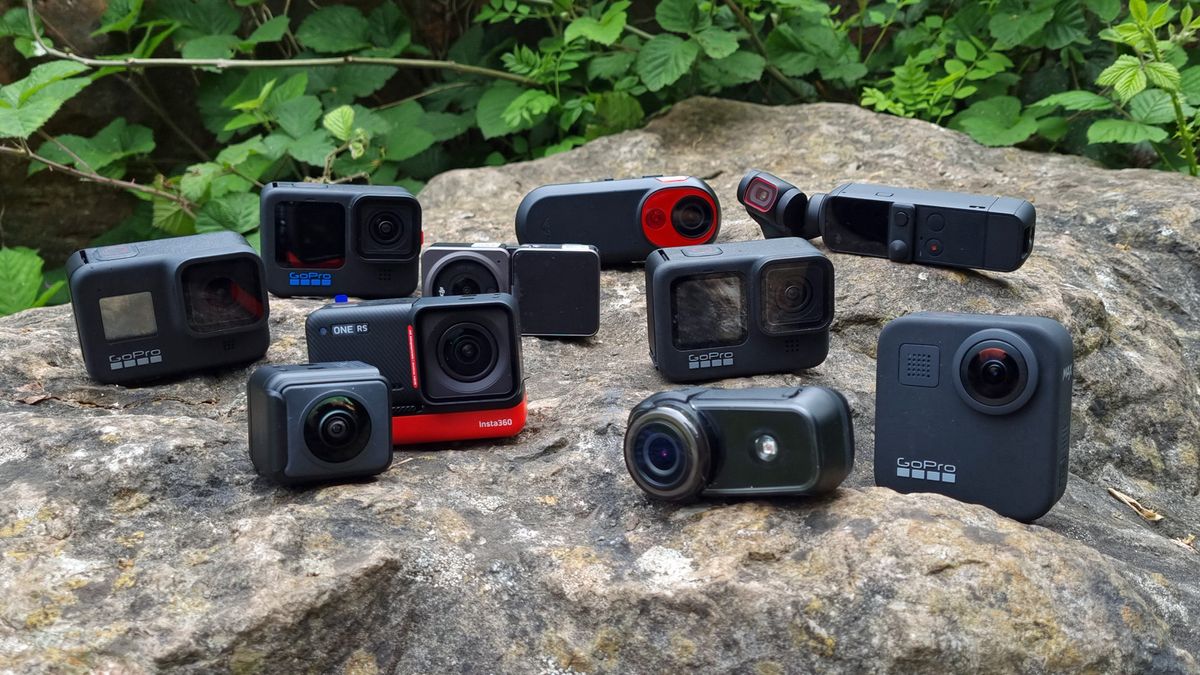
Action Cameras

Action Cameras, Capturing Life’s Adventures with the Latest Tech

There was a time when capturing your adventures meant lugging a bulky camcorder or risking your expensive smartphone in dangerous environments. If you wanted to film yourself skiing down a mountain or diving into the ocean, the logistics were complicated and the equipment was vulnerable. Then came a tiny, rugged device that changed everything: the action camera. Led by the iconic GoPro, this category of gadget has exploded in popularity, putting professional-quality, stabilized video capture into the hands of anyone with an adventurous spirit. Today’s action cameras are smaller, smarter, and more capable than ever, opening up creative possibilities that were once reserved for Hollywood productions.

Action Cameras, Capturing Life’s Adventures with the Latest Tech

Action Cameras

The Birth of a New Category

The action camera story begins with Nick Woodman, a surfer and entrepreneur who wanted to capture high-quality action shots of himself and his friends surfing. Dissatisfied with the existing options, which were either too expensive, too bulky, or not waterproof, he set out to create his own solution. In 2002, he founded GoPro, and the first cameras used 35mm film. It wasn’t until the digital era that GoPro truly took off. The company’s genius was understanding that the camera wasn’t just for professionals; it was for anyone who wanted to document their life from a first-person perspective.

The early GoPros were simple: a rugged, waterproof box that could be mounted almost anywhere—on a helmet, a surfboard, a bike handlebar. The quality was decent, but the real magic was the perspective. For the first time, viewers could feel what it was like to ski down a double black diamond or catch a wave. The action camera democratized adventure filmmaking, and a new category was born.

The Technology Inside Today’s Action Cams

Modern action cameras are technological marvels packed into tiny, durable bodies. The most significant advancement in recent years has been image stabilization. Early action footage was often shaky and nauseating to watch. Today, cameras like the GoPro Hero series and the DJI Osmo Action use sophisticated electronic and gyroscopic stabilization that makes footage look like it was shot on a gimbal, even when you’re bouncing down a mountain trail. This technology, often called HyperSmooth (GoPro) or RockSteady (DJI), has been a game-changer, making amateur footage look professionally smooth.

Image quality has also skyrocketed. Modern action cameras can shoot in stunning 4K and even 5.3K resolution at high frame rates, allowing for smooth slow-motion playback. Sensors have grown larger, improving low-light performance, which was once a major weakness. Many now offer HDR (High Dynamic Range) video, capturing more detail in both bright skies and shadowed areas simultaneously.

Durability remains a core feature. Most flagship action cameras are waterproof out of the box to depths of 10 meters or more, without needing an external housing. They are built to withstand shocks, dust, and freezing temperatures. They are the rugged SUVs of the camera world, designed to go where other cameras fear to tread.

Beyond the Hero Shot: New Features and Use Cases

Action cameras have evolved beyond their extreme sports roots. One of the most exciting developments is the inclusion of front-facing screens, making them perfect for vloggers and content creators. You can now frame yourself perfectly while talking to the camera, something that was awkward with earlier models.

Voice control has become standard, allowing you to start and stop recording hands-free while your hands are occupied with, say, holding onto a cliff face. The rise of 360-degree cameras, like the Insta360 series, has added another dimension. These cameras capture everything around you simultaneously, allowing you to “reframe” the shot afterward, choosing your angle in post-production as if you had multiple cameras running at once. This has opened up incredibly creative possibilities for unique, sweeping shots.

Action cameras are no longer just for adventure. People use them for capturing family vacations, documenting road trips, filming behind-the-scenes content for work, and even as dash cams. Their small size and versatility make them a creative tool for anyone who wants to capture life from a dynamic perspective.

Choosing the Right Action Camera

With so many options on the market, how do you choose? The GoPro Hero series remains the market leader, offering the best all-around performance, stabilization, and ecosystem of mounts and accessories. The DJI Osmo Action series is a strong competitor, often with better low-light performance and a innovative magnetic mounting system. For those interested in 360-degree video, Insta360 is the go-to brand, offering cameras that unlock truly unique creative possibilities.

Consider what you’ll be filming. If you’re a hardcore adventurer who needs the best stabilization and durability, a flagship GoPro is hard to beat. If you’re a vlogger, the dual screens on the DJI or the newer GoPros are essential. If you want to create unique, reframable content, look at a 360-degree camera. And if you’re on a budget, last year’s flagship model or offerings from companies like Akaso offer surprisingly good performance at a fraction of the price.

Action cameras have transformed how we document our lives. They’ve taken us inside the barrel of a wave, to the summit of a mountain, and along the winding trails of our everyday adventures. With the latest tech packed into these tiny rugged bodies, the only limit is your imagination.