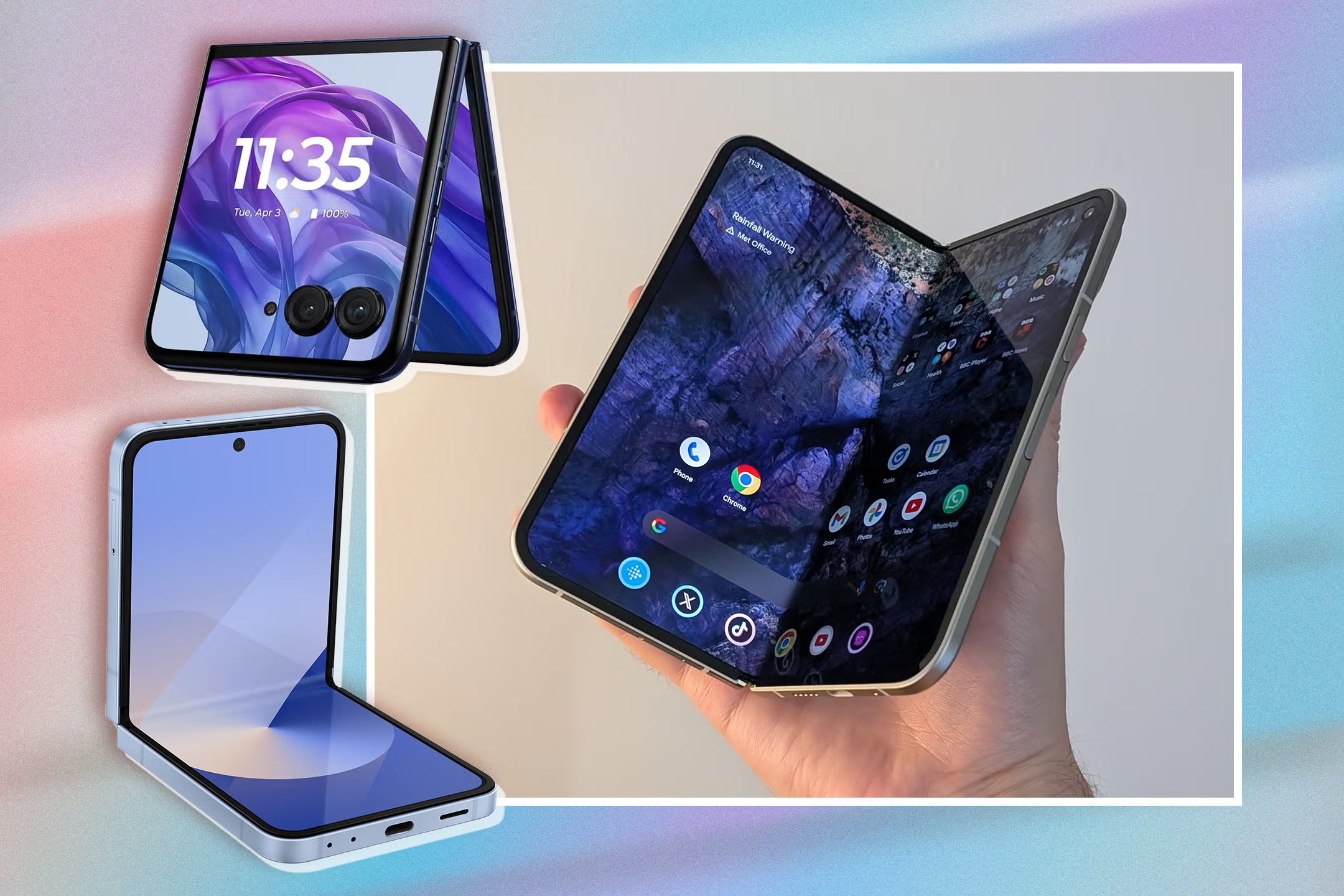
Remember when a phone was just a phone, and a tablet was just a tablet? Then, a few years ago, a new category emerged from the realm of science fiction: the folding phone. Devices like the Samsung Galaxy Z Fold and Z Flip promised to revolutionize mobile computing by offering a large, tablet-sized screen that could fold down to fit in your pocket. It was audacious, it was expensive, and it was fragile. Now, several generations in, the folding phone is no longer a prototype curiosity. But as prices remain high and durability concerns linger, we must ask the critical question: Is this the inevitable future of the smartphone, or is it an expensive, niche gimmick?
The Rise of the Folding Phone: A Glimpse into the Future or a Gimmick?
The Birth of a New Form Factor
The concept of a foldable display had been teased for years, with companies showing off prototype devices behind glass cases at tech trade shows. The problem was monumental: how do you create a glass-like screen that can bend hundreds of thousands of times without cracking? The answer was a shift from glass to a flexible polymer, protected by a thin, scratch-prone plastic layer. In 2019, the race went public. Royale, a small Chinese company, beat everyone to market with the Royale Flexpai, a clunky device that looked more like a prototype than a product. Shortly after, Samsung was forced into an early, embarrassing launch of the original Galaxy Fold after reviewers discovered that removing a seemingly protective screen layer would break the display. It was a PR disaster, but Samsung retreated, redesigned the device, and re-launched it to much stronger reviews. The folding phone category was officially born.
The Two Philosophies: Fold and Flip
Today, the market has largely settled into two distinct form factors, best exemplified by Samsung’s two main lines, though competitors like Google (Pixel Fold), Motorola (Razr), and OnePlus (Open) have joined the fray.
First, there’s the “phone-to-tablet” fold, like the Galaxy Z Fold series. These devices open vertically to reveal a large, square-ish inner screen, perfect for multitasking, reading, watching movies, or using apps that benefit from more real estate. When closed, they function as a (thick) but fairly standard smartphone. The promise here is convergence: carrying one device that can be both your phone and your tablet.
Second, there’s the “clamshell” fold, like the Galaxy Z Flip or the new Motorola Razr. These devices fold horizontally, like the flip phones of the early 2000s. Their primary benefit is portability. When folded, they become incredibly compact, easily slipping into small pockets or clutches. When opened, they are a full-sized, modern smartphone. The focus here isn’t on expanding screen size, but on shrinking the device’s footprint.
The Pros: Why You Might Want One
The advantages of foldables are compelling. For the “Fold” style, the ability to have a tablet in your pocket is a game-changer for productivity. You can run two apps side-by-side on a screen large enough to actually be useful. You can watch a video on one half of the screen while browsing the web on the other. Reading PDFs or comics is a vastly superior experience. The large inner screen also serves as a built-in kickstand for hands-free video calls or media viewing.
For the “Flip” style, the main advantage is the compact form factor. It’s a return to the days when a phone could disappear in your hand. The external “cover screen” on modern flip phones has also become a useful feature, allowing you to check notifications, take selfies with the main cameras, and even reply to messages without opening the device. Both styles offer a “wow” factor that traditional slab phones have lost. Folding a phone shut to end a call is also a deeply satisfying, tactile experience that swiping to end a call just can’t match.
The Cons: The Compromises You Have to Accept
However, this new form factor comes with significant compromises. The most obvious is the crease. No matter how much manufacturers improve the hinge mechanism, a visible crease runs down the middle of the inner screen. While you stop noticing it after a while, it’s always there, both visually and tactilely.
Durability remains a major concern. The inner screen is made of plastic, which is far softer and more scratch-prone than glass. A fingernail can leave a permanent dent. While modern foldables have improved dust and water resistance (many now have an IPX8 rating for water, but dust resistance is still a challenge), they are still more fragile than a standard IP68-rated phone. You will think twice before taking it to the beach.
Price is the biggest barrier to entry. Foldables are flagship devices with flagship prices, often costing $1,700 or more. That’s two or even three times the price of a very capable traditional smartphone. Finally, there’s the thickness and weight. When closed, a Fold-style device is noticeably thicker and heavier than a standard phone, which can be off-putting.
The Verdict: The Future, But Not for Everyone
So, is it the future or a gimmick? The most honest answer is that it’s a glimpse into a future that isn’t quite ready for prime time. The technology is undeniably impressive and offers genuine benefits that traditional phones cannot. For early adopters, tech enthusiasts, and productivity power users, the trade-offs are worth it. They are willing to pay a premium and handle the device with care for the unique functionality it provides.
For the vast majority of consumers, however, the folding phone remains a fascinating but impractical curiosity. The high price, durability concerns, and lingering compromises mean that the traditional slab-style smartphone is still the safer, smarter, and more affordable choice.
But the trend is clear. As the technology matures, prices will drop, hinges will get better, and screens will become more durable. The crease will likely fade, and the weight will decrease. The folding phone may not be mainstream today, but it represents a clear direction for the future of mobile devices. It’s not a gimmick; it’s an evolution, and we are watching it happen in real-time, one careful unfold at a time.